← Portfolio · P-02
Robotics · Simulation-first
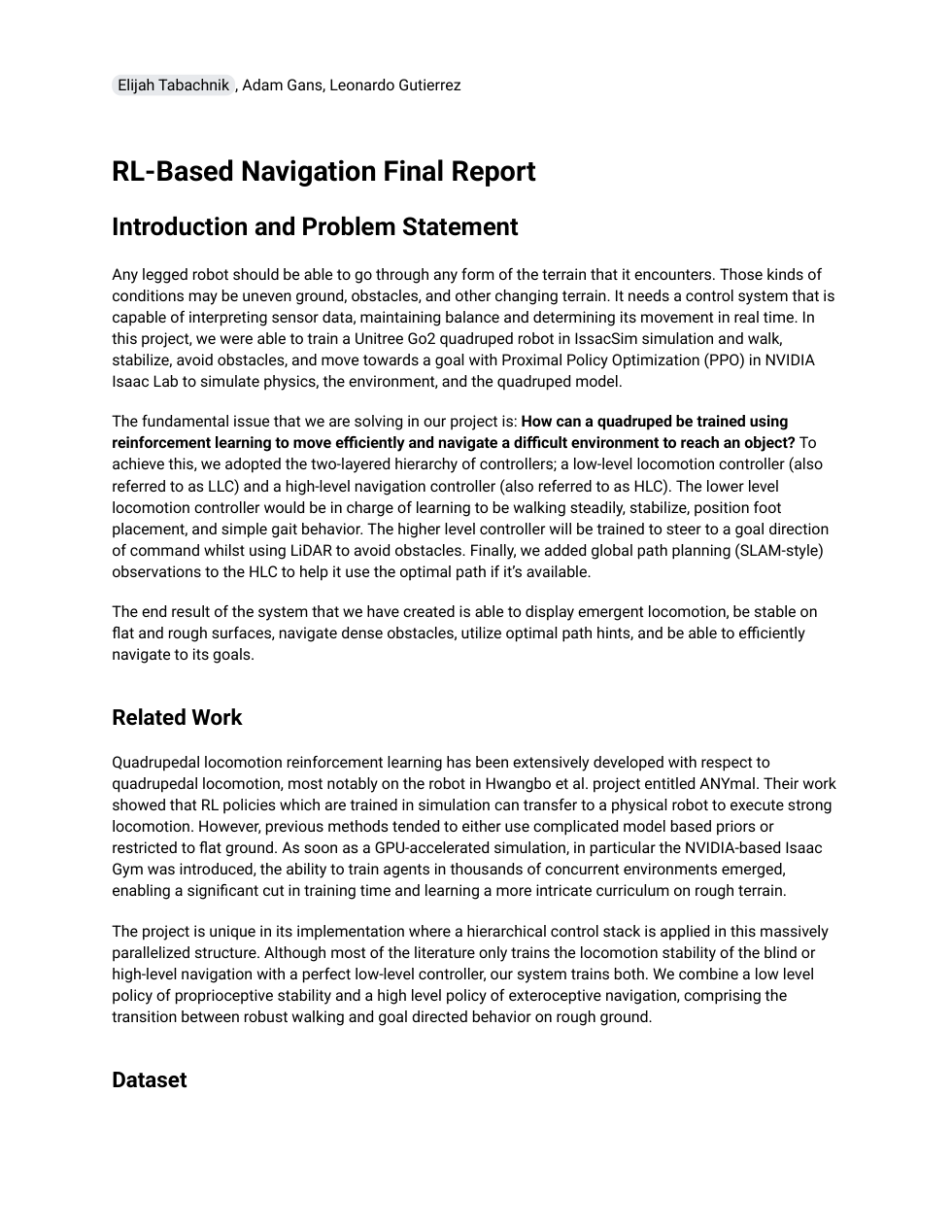
Quad-Pedyr — RL locomotion and navigation for a quadruped robot.
Hierarchical PPO trained across 4,096 parallel Unitree Go2 simulations, LiDAR-guided navigation, and the staged mechanical design to eventually build the platform for real.
A two-layer controller, trained at scale.
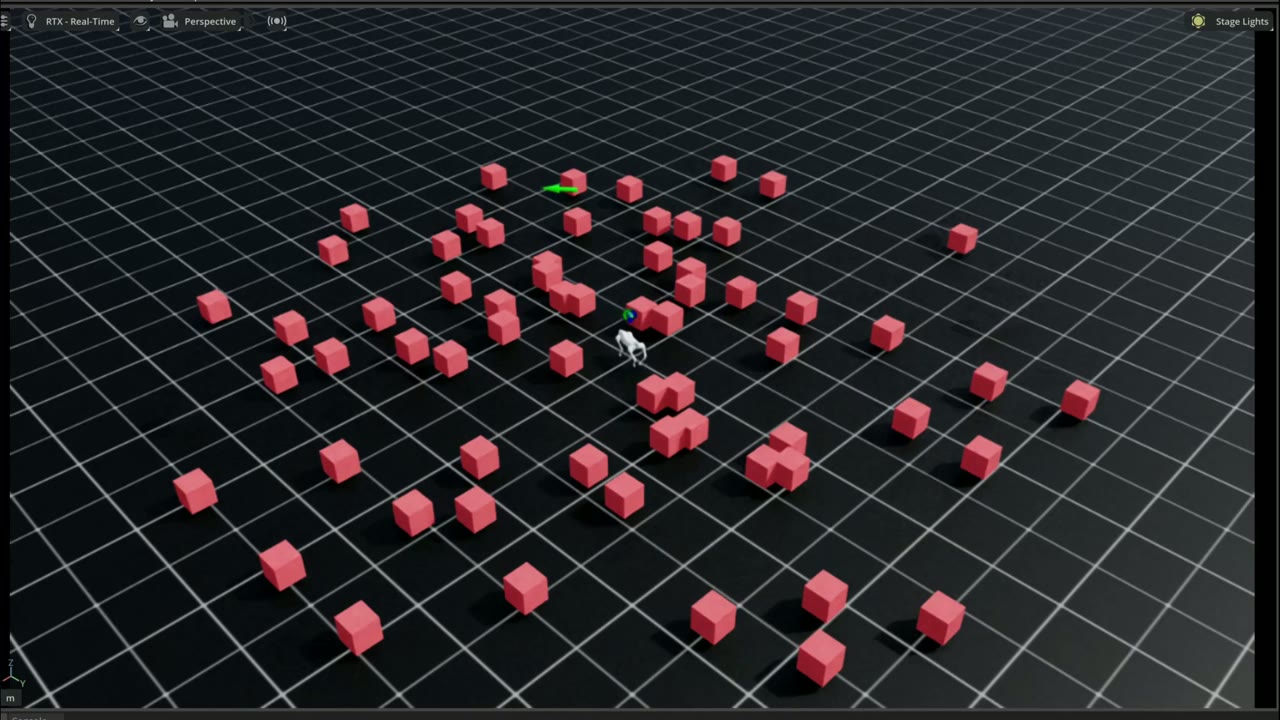
A high-level policy turns LiDAR-like observations, relative goal position, and lookahead path hints into motion commands; a low-level policy turns those into stable gait.
Controller hierarchy
The high-level policy handles navigation intent from RayCaster (LiDAR-like) observations, the relative goal position, and lookahead path hints. The low-level policy converts those instructions into joint-position behavior — trained first, so navigation always sits on a stable gait.
Training setup
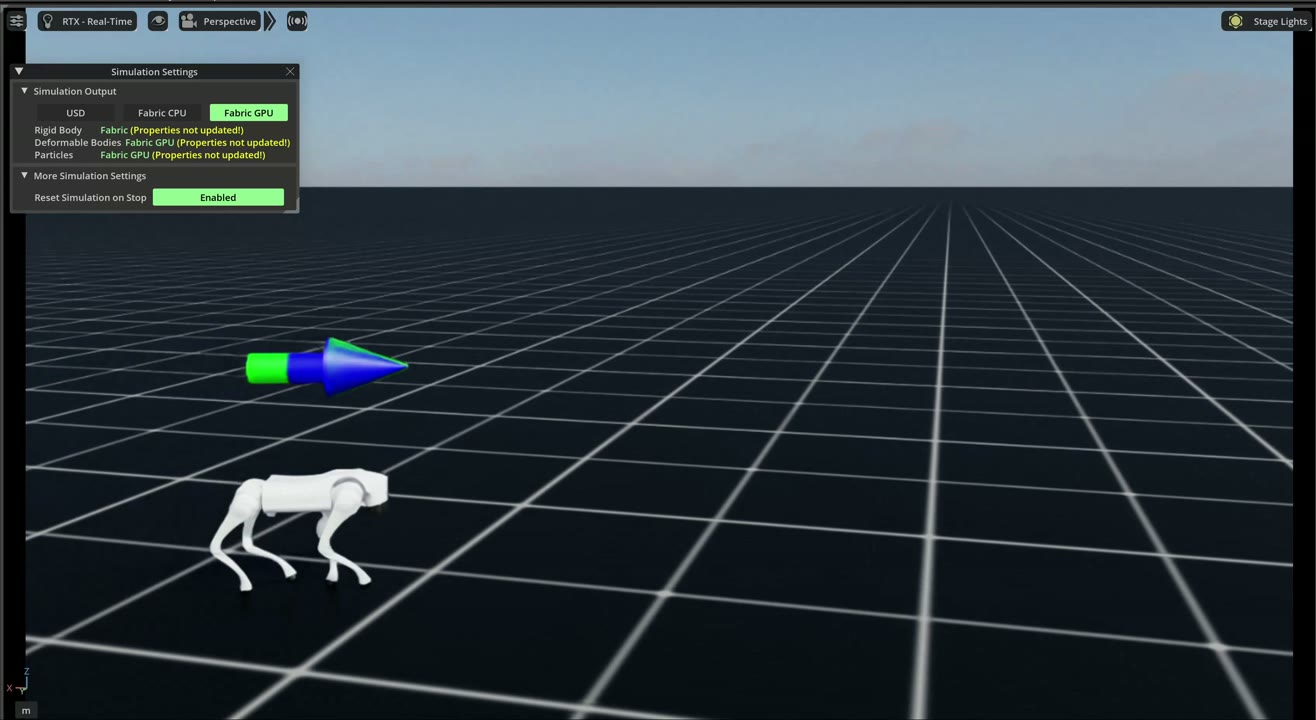
Training ran with 4,096 parallel simulated Unitree Go2 robots in Isaac Lab, with NVIDIA PhysX 5 handling terrain interaction, collisions, and sensor simulation across flat and rough terrain.
What we observed
Locomotion improved across both flat and rough environments, with especially strong learning on rough terrain. Exteroception materially improved navigation on rough ground — and reward shaping was essential to keep the agent from exploiting the simulator with poor-but-legal movement shortcuts.
The robot, in your browser.
The actual Unitree Go2 kinematic tree, loaded from its URDF — drag the joints, snap to poses, and see the observation space the policy consumed.
From CAD to policy — and eventually to hardware.
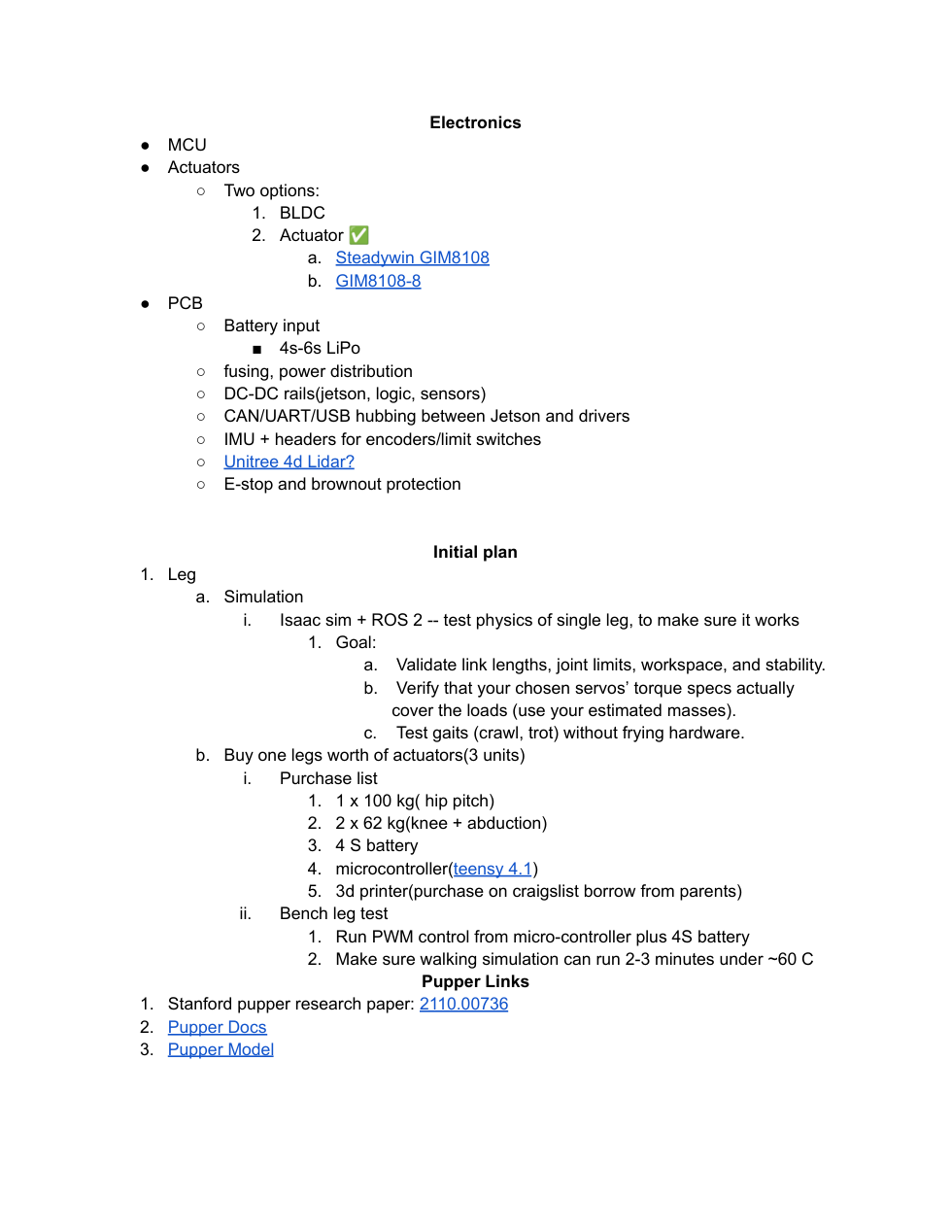
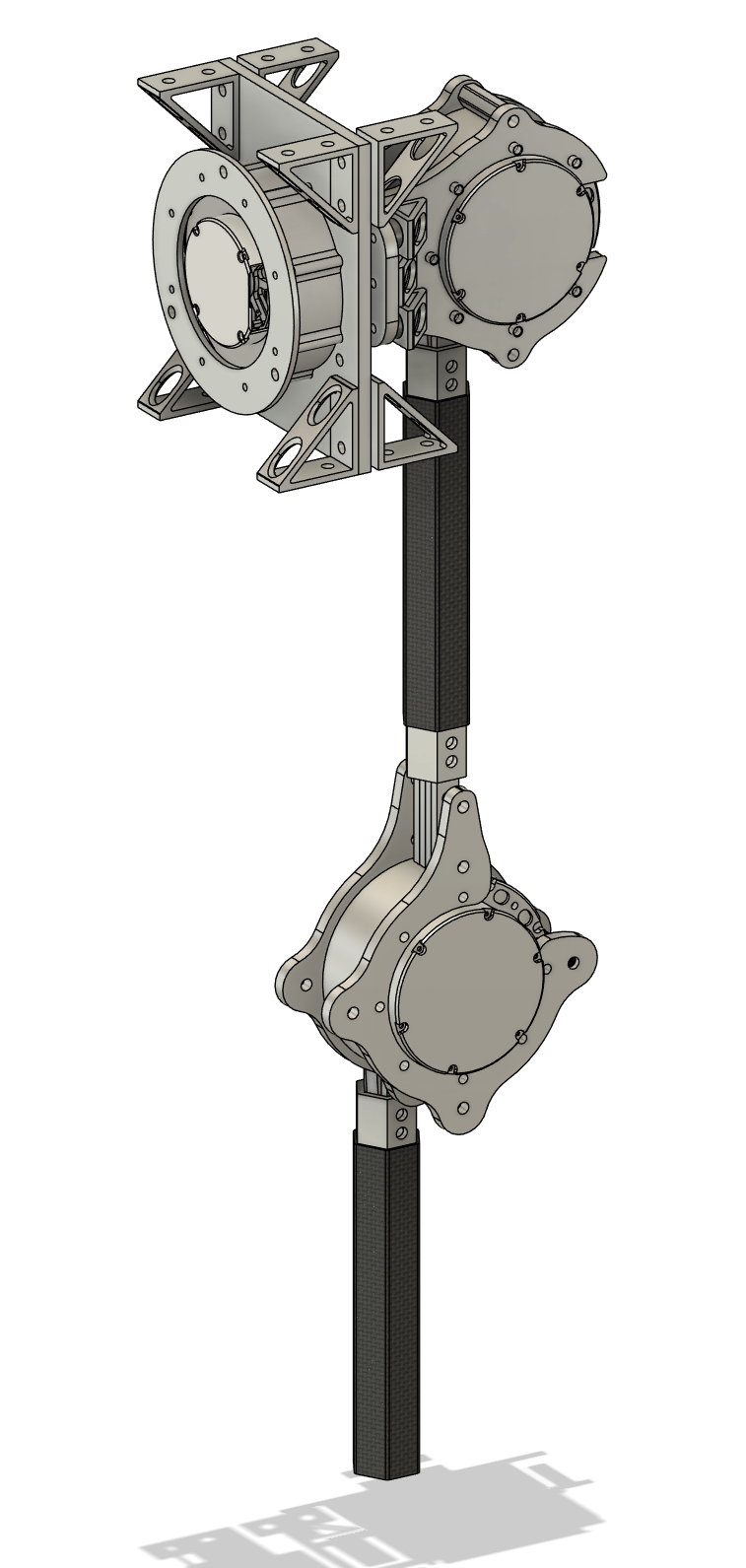
The design track is solo work: validate a single leg in simulation, bench-test one assembly, then scale to a full platform with the right power, sensing, and control backbone.
Electronics stack
MCU control, actuator options, a 4S–6S LiPo battery path, fused power distribution, DC-DC rails, and CAN / UART / USB routing between Jetson-class compute and motor drivers.
Validation plan
Isaac Sim + ROS2 tests for a single leg: link lengths and joint limits, actuator torque margins against estimated mass, and gait trials before risking hardware.
Mechanical constraints
Chamfered bolt holes, actuator mounting constraints, output-plate alignment, and the fastener and standoff clearances that matter once CAD becomes hardware.